Changelog

Follow new updates and improvements to StoreRank.ai.

Query Fan-Out, AI Queries & FAQs in Google Merchant Center
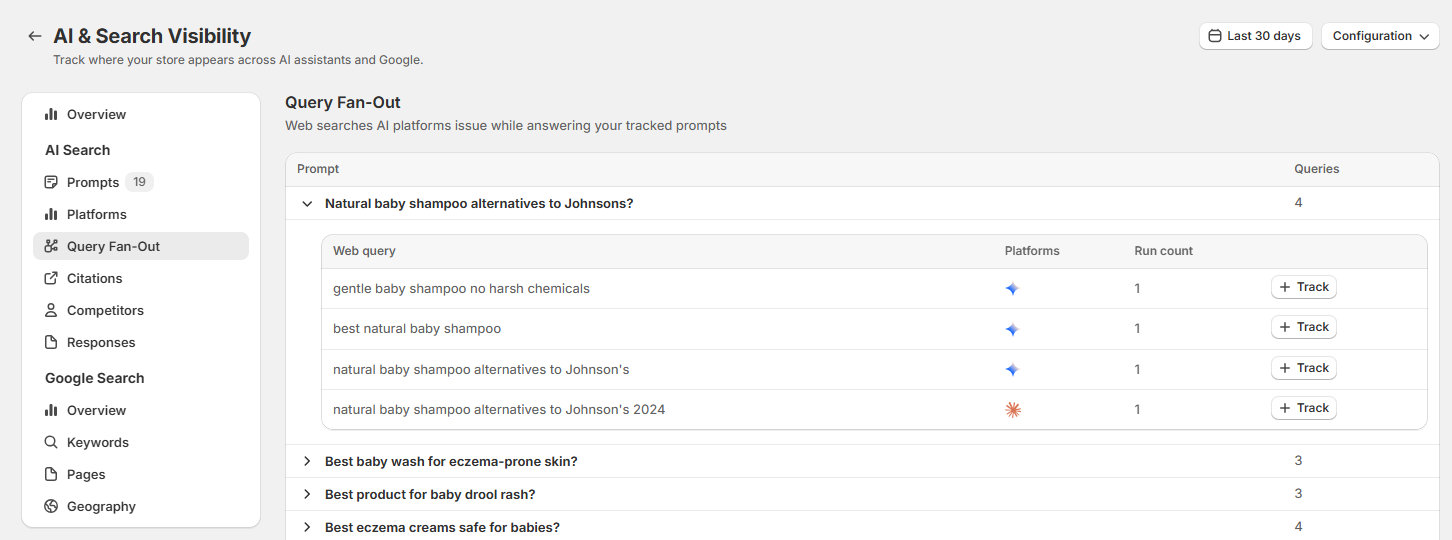
AI & Search Visibility: Query Fan-Out
New tab that shows the web searches ChatGPT, Claude and Gemini run in the background when they answer your tracked prompts. Each search is grouped under its prompt, with the platform and run count, so you can see what AI looks up before it recommends a product. You can track any search as a prompt, or add it as a custom topic in AI Article Autopilot.

AI & Search Visibility: AI Queries
New tab that pulls the long, conversational queries (10+ words) from your Google Search Console data. These are the AI-style questions people now type into Google. Each query shows clicks, impressions, CTR and position, so you can spot content gaps and recurring shopper questions. Track a query as a prompt, or turn it into an article in one click. Requires Google Search Console to be connected.

AI Product Optimizer: FAQs in Google Merchant Center
StoreRank can now send your product FAQs to Google Merchant Center through the question_and_answer attribute, which Google built for conversational experiences like Google AI Mode. Switch it on in AI Product Optimizer → Settings → Google Merchant Center, then add the feed URL in Merchant Center as a supplemental data source. This only adds FAQs to products already in Merchant Center and doesn't change your existing Google sync.
New

Product Autopilot

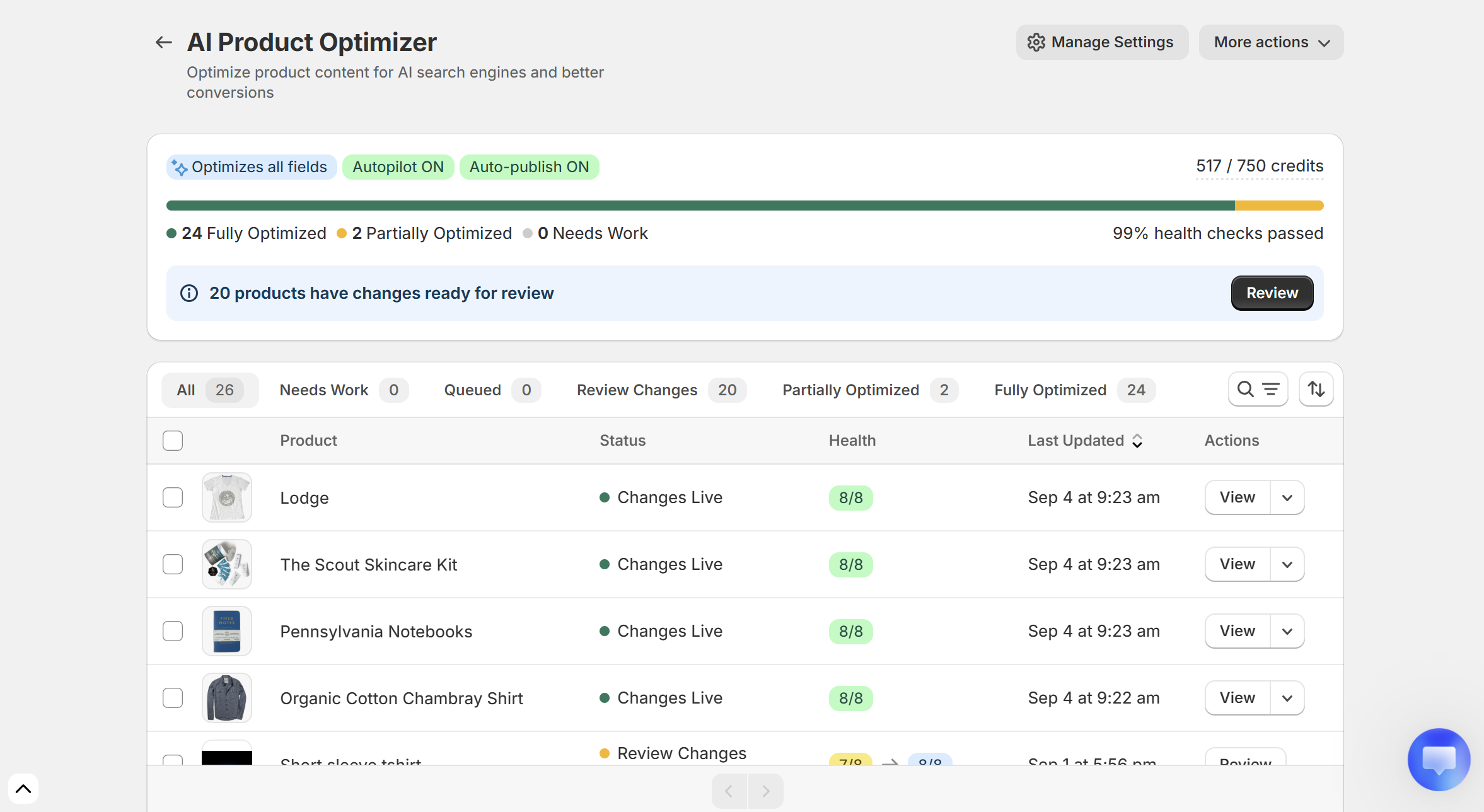
StoreRank can now optimize your new products automatically, and publish the improvements you choose without waiting for review.

What's new

Two switches under AI Product Optimizer → Settings:

Optimize new products automatically Every product you add gets optimized using your selected fields, up to your monthly credit limit. This creates suggestions only, it doesn't publish anything.

Publish improvements automatically You pick which fields go live without review. Everything else waits under Needs review for your approval.

Recommended setup

Auto-publish Meta titles, Meta descriptions and Image alt text. These aren't shown on your product page, they just help search engines and AI understand your products.

Keep review on for Product titles, Product descriptions and FAQs. Those are what shoppers see, so you'll want the final word. You can hand them over later once you like the output.

Good to know

  • Autopilot is off by default. Nothing changes until you enable it.

  • It applies to new products only. Existing products can still be optimized in bulk from the Product Optimizer.

  • Turning it on won't publish anything already sitting in Needs review.

  • You can change which fields publish automatically at any time.

NewImproved

New AI Visibility Dashboard & Agentic Product Schema

New AI Visibility Dashboard

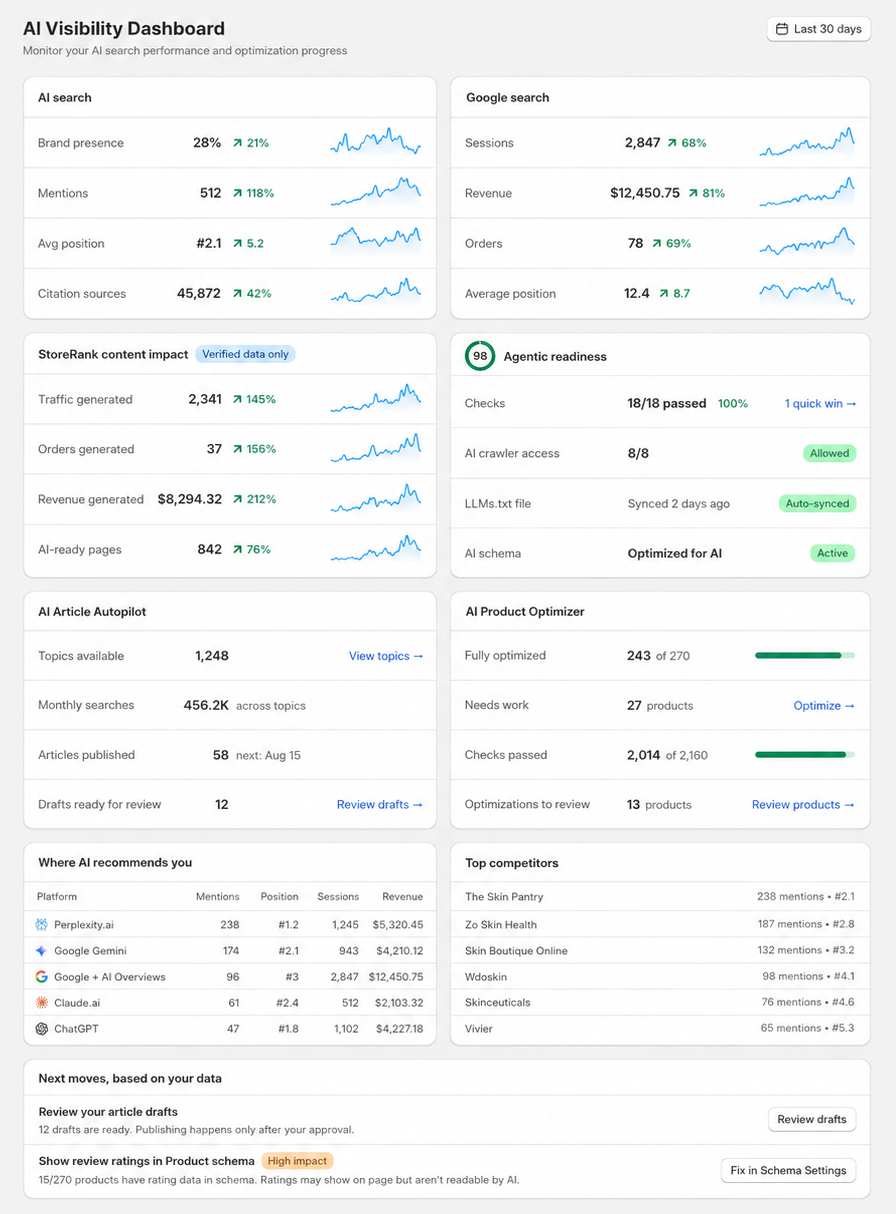
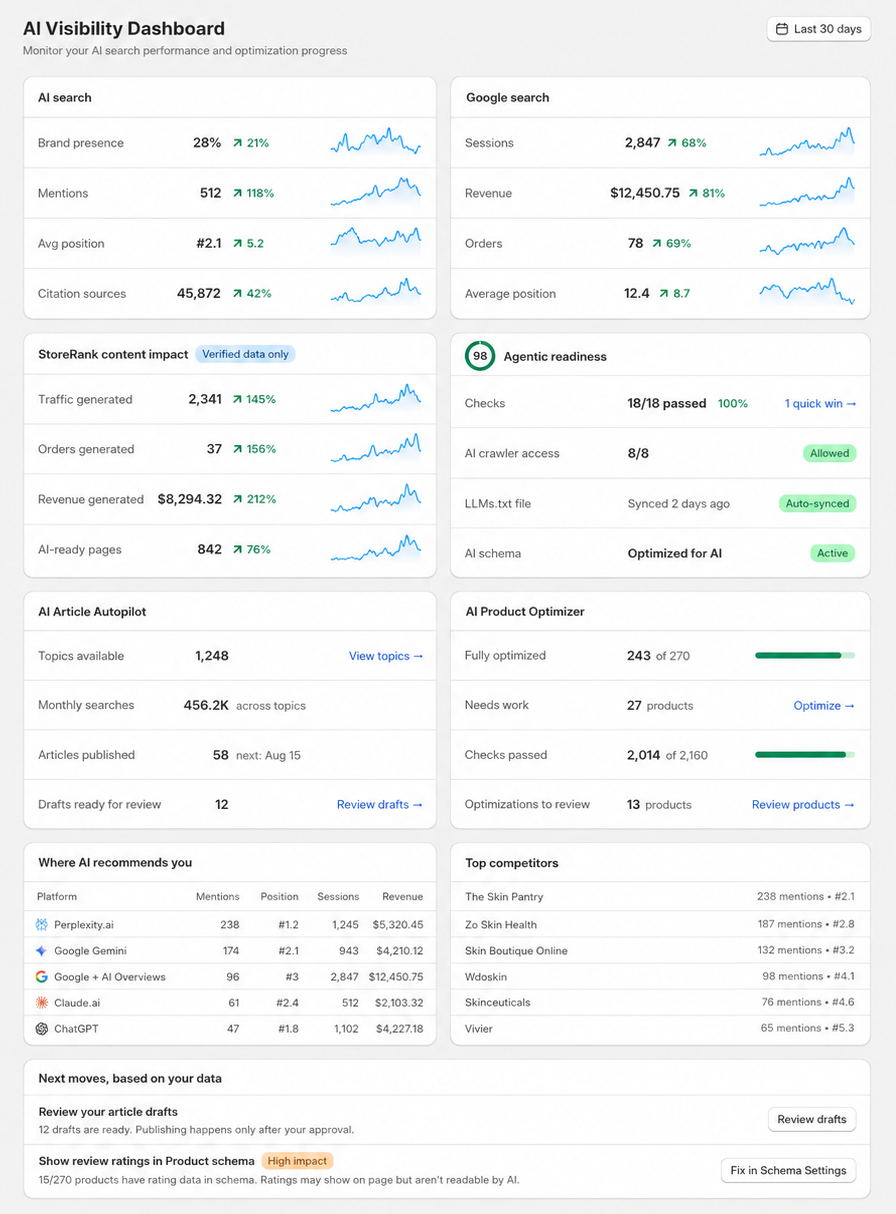
The dashboard has been rebuilt from scratch. One view for what is actually happening across AI assistants and Google Search.

AI Visibility Dashboard
  • AI search and Google search side by side. Brand presence, mentions, average position, citation sources and AI sessions for AI platforms. Sessions, revenue, orders, impressions and average position for Google.

  • StoreRank content impact. Traffic, orders and revenue from pages StoreRank published or improved, measured first touch. No estimates, no projections.

  • Agentic readiness. Your readiness score with checks passed, crawler access, llms.txt and schema status at a glance, plus quick wins you can fix in minutes.

  • Where AI recommends you. Mentions, position, sessions and revenue per platform, including Google and AI Overviews combined, next to your top competitors.

  • Article Autopilot and Product Optimizer status. Topics available, articles published, drafts waiting, catalog health and optimizations ready to review.

  • Next moves. A short prioritized list based on your own data, so you always know what to do next.

Live now, nothing to enable.

Product schema rebuilt for agentic commerce

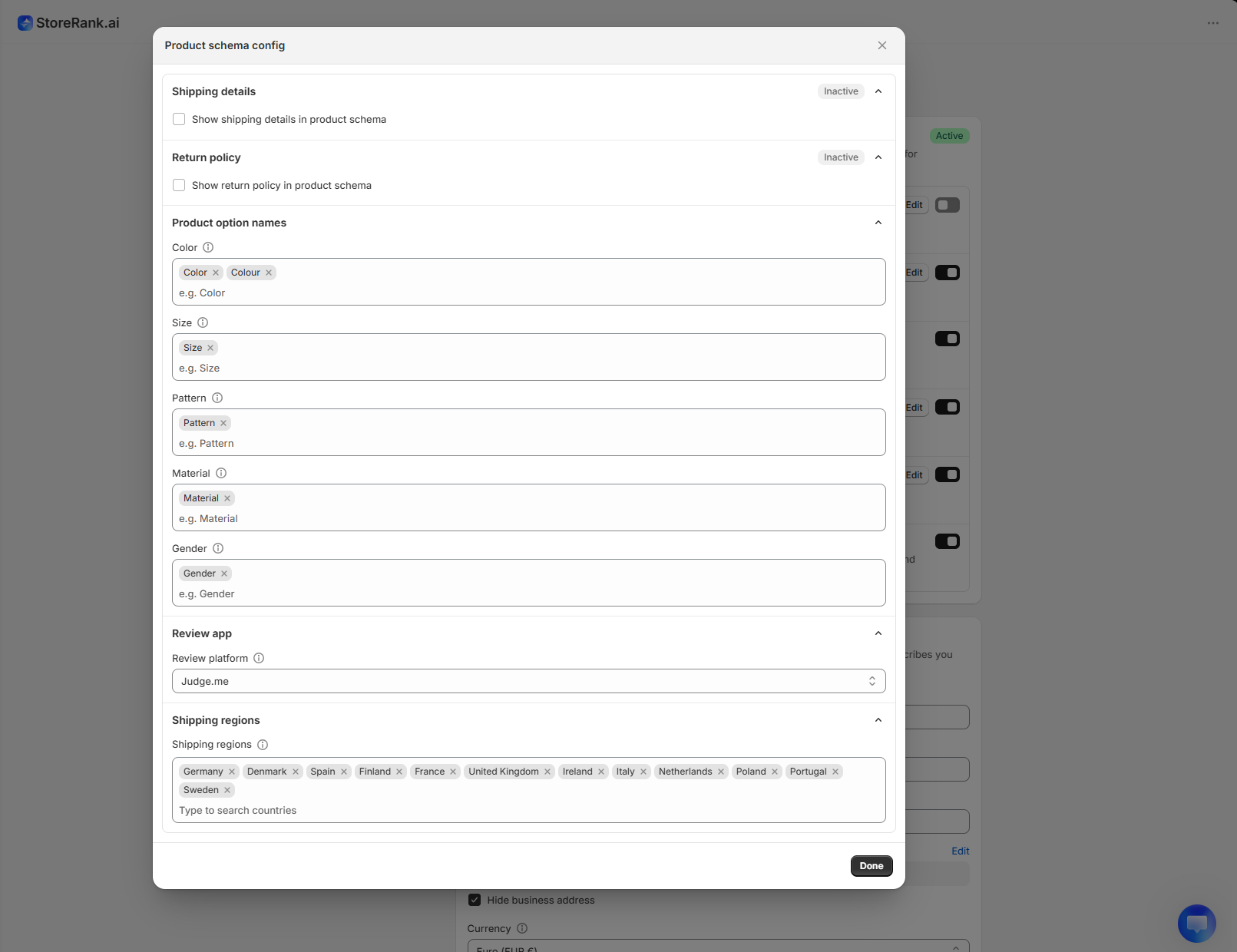
Product Schema Configurator

AI assistants and agentic checkouts read your product data to decide whether to recommend you and whether they can transact with you. Most stores are missing critical fields.

  • ProductGroup schema. Products with variants now use ProductGroup with each variant as a linked Product, instead of a single flattened product. This is the format Google and shopping agents expect for multi variant catalogs.

  • All variants included, not just the first one.

  • Real SKU, GTIN and MPN where available.

  • Item condition and structured product specs.

  • Shipping details and return policy.

  • Correct variant mapping for color, size, material and other options.

If you have not enabled Product Schema yet, now is the time to turn it on.

NewImproved

Earlier updates